Written by: Kyle Scott, Broker
I’ve turned down properties that looked great in the listing photos and written offers on properties that looked ordinary. The difference is almost never the timber. It’s whether I can get in and out clean, whether there’s water, and what the hunting pressure is like in the area. Here’s the checklist I actually carry when I go to look at a recreational tract, in the order I check things, with the two items that end the visit before it starts.
Start with access, because it’s the one you can’t fix
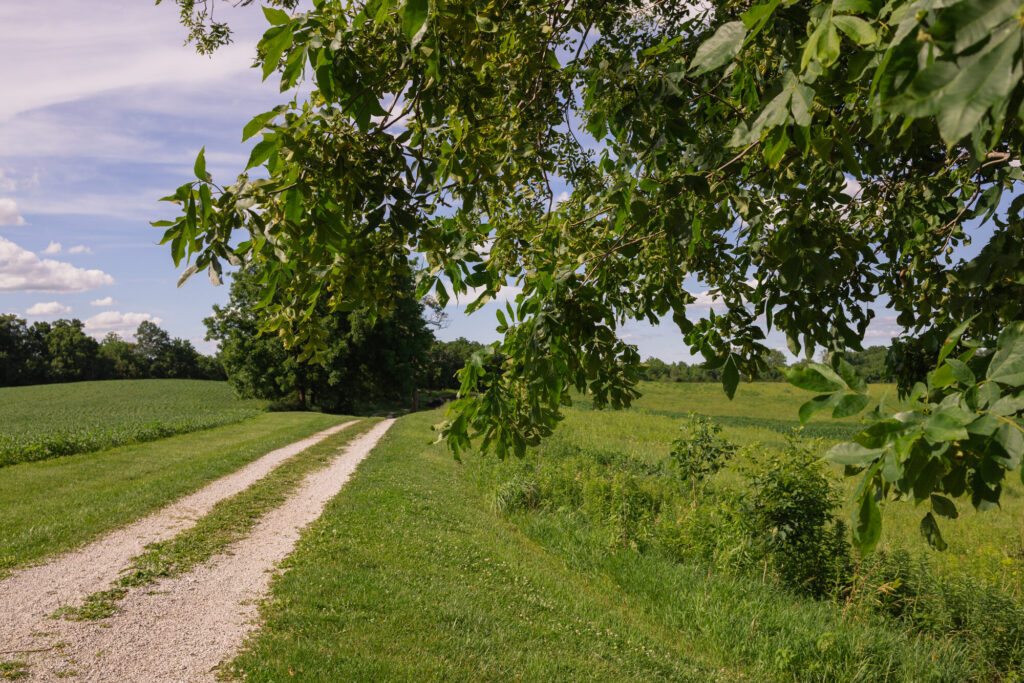
Access is pass or fail, and it’s the first thing I look at. Ask how you get to the property, then go do it in the vehicle you’d actually use in November.
Deeded access is what you want. A handshake with a neighbor is not access, no matter how long it’s been honored, since it ends when that neighbor sells. If the access is an easement, read it. Easements have terms: who maintains, what vehicles, what times of year. A recreational easement that excludes construction equipment is a problem the day you want to build a cabin or put in a pond.
If you can’t get to the back of the property without permission from somebody, the property is worth less and you should offer accordingly.
Next I would look at access from a strategic standpoint. In a perfect scenario, you can access the property from every direction so you can adjust your strategy depending on the wind. The most common winds throughout the best hunting days are going to be W, NW, or N, so ideally you can access the farm from the south or the east on these days. If your only access is from the west or north, you will be spooking more deer than you realize just getting to your stand.
Water second
Water is one aspect that is often overlooked. Just like us, deer need water to survive, and it becomes especially important throughout the fall and winter when the habitat goes from green to brown. Deer can get roughly 50% of their needed water intake from plants throughout the growing season, but when those plants go dormant, they have to find water elsewhere. This is when having a water source can be more attractive than any food plot.
Go find the water in person. Aerial imagery might show ponds that have been dry for six years. If the only water is a neighbor’s pond fifty yards over the line, understand that you’ve bought a travel corridor rather than a destination. If you can’t find water, start creating a plan to add water. Water holes can be as simple as a 150-gallon livestock tank buried into the ground or you can rent a mini-excavator or skid steer for the day and dig a couple water holes throughout the property.
Habitat is fixable, and buyers sometimes miss it
Here’s the turn. Most buyers walk a property and grade it on what they see growing. Habitat is the most changeable thing on the tract. Bedding cover can be created in two seasons. Edge can be cut. A monoculture of mature timber with a clean floor holds fewer deer than a thick mess, but a monoculture can be turned into diverse habitat with a timber cut or some timber stand improvement you do yourself. While big, open timber that you can see several hundred yards through is stunning, it is not going to hold as many deer as the property that is so thick you can barely walk through it.
What I want to see is the bones: topography that funnels movement, a mix of cover types or the room to create them, and what the potential is to add food. Once you’re past the walk-away question and into what a property could become, the evaluation guide goes deeper on habitat, food, stand placement, and herd health.
| What you see | Fixable? | Rough timeline |
|---|---|---|
| No access | No | Never, without buying it |
| No water | Yes | One season if you’re able to add water |
| Poor bedding cover | Yes | Two to three seasons |
| No food source | Yes | One season |
| Heavy neighbor pressure | No | You manage around it |
| Mature timber, no understory | Yes | Two seasons with a chainsaw and a plan |
Neighbor pressure is the number nobody checks
Your hunting quality is set as much by what happens across the fence as by what you do. On a small tract in a heavily hunted county, you’re hunting deer that spend most of their time somewhere else. If your goal is to shoot mature deer, you may never reach your goal regardless of how much work you do to your property.
Look for stands visible from your property line or a worn two-track running to the boundary. Then look at the parcel sizes around you. Being surrounded by three 200-acre farms is a completely different property than being surrounded by twelve 10-acre lots, even if your tract is identical. You can also knock on the neighbors’ doors prior to buying a property to get to know them. If they do hunt, what kind of hunter are they, and does this align with your goals? If they don’t hunt, do they allow someone else to hunt, or is their property untouched during hunting season? The latter can sometimes be the best-case scenario for you.
One thing you can’t fix by buying more acreage: the deer genetics already in the area. Overall pressure and management across the neighborhood shape the herd more than the boundary of any one tract. Control a large enough block and you can move the needle on management yourself, since there’s less outside pressure working against you. Buy into an area that’s already well managed and you likely don’t need nearly as much acreage to get the same result.
FAQ: Evaluating hunting land before you buy
How many acres do I need?
Fewer than people think, if the layout is right and the neighbors have the same hunting goals as you. Forty acres with good bedding and controlled access can hunt better than 150 acres with poor access or a lot of hunting pressure around it. Buy the layout and the neighborhood, not the number.
Should I look at deer harvest numbers for the county?
Yes, as background rather than as a decision. The Indiana DNR publishes county-level deer data, and it’s useful for comparing regions. It tells you nothing about the specific 60 acres you’re standing on or the quality of deer harvested.
What about timber value?
Get it evaluated before you close if there’s marketable timber. It’s real money and it’s frequently mispriced in both directions. It’s also a separate question from whether the property hunts well.
One thing to do on your next showing
Walk the entire property line, not the interior. An hour on the boundary tells you about access, neighbor pressure, encroachments, and where deer enter and leave. Most buyers walk to the middle, look at the timber, and drive home.
Walk the property. Call the office to set it up.
About the author
Kyle Scott is a Broker at Hageman Realty specializing in recreational land, hunting, timber, and waterfowl properties. He has a background in civil engineering and is licensed in Indiana and Illinois.
Read more about Kyle at https://hagemanrealty.com/agent/kyle-scott/