Written by: Sara Hageman Schenck, Managing Broker
Most farmland sellers interview one broker. Usually it’s whoever sold the neighbor’s place or whoever sent the postcard, and the listing agreement gets signed at the kitchen table the same afternoon. That’s fine if that broker is the best in the area, specializes in farm real estate, and has real experience behind them. More often it means the farm ends up marketed by someone who’s excellent at selling houses. Farmland is a different product with a different buyer pool, and the difference shows up in the price. Here are the questions that tell you which one you’re sitting across from, including the ones that are uncomfortable for us.
Worth asking about beyond any single broker: their years of experience, whether they work as part of a team, and what back-office support stands behind them to actually serve you through a transaction.
Ask what they’ve sold in your county, not how long they’ve been licensed
Years in business is the wrong question. A broker with thirty years of residential sales and two farm closings knows less about your tract than a broker with six years and forty. What matters is thirty years of farm brokerage experience across many different kinds of transactions, the kind that teaches someone what actually changes value and what to expect when something unusual comes up.
Ask how many farms they’ve sold in your county in the last three years, and what the acreage range was. A farmland broker will have the number ready. Then ask what those farms listed at against what they closed at. A broker who gives you one figure for both is describing a hope rather than a history.
Ask how they’ll find the buyer
“We’ll list it and market it” is not an answer. The real answer names categories of buyer and, ideally, names of operations.
For most Indiana farmland the buyer is one of four: the neighbor who’s wanted the adjoining acres for years, an expanding farm operation within about twenty miles, an investor running a 1031 exchange on a deadline, or a landowner assembling a block. Each of those is reached differently. The neighbor gets a phone call. The 1031 buyer gets a packet with the underwriting in it, and gets it fast, since exchange deadlines don’t move.
Ask how many calls they’ll make and to whom. Postcards are cheap and buyers are specific. Ask how extensive their network actually is in your county, and how many of those buyers they’re in regular contact with.
Ask what could go wrong with your farm
A broker who tells you your farm is wonderful is telling you what you want to hear. A broker who’s been on the tract can name what will cost you at closing: a drainage issue, a lease that doesn’t terminate when the sale needs it to, a fence line that doesn’t match the survey, an access easement that lives in a handshake.
Naming the problems early is what lets you fix or price them. Finding them during a buyer’s due diligence is what kills the deal or reprices it.
Read the term and termination first
Sellers read the commission line and skip the rest. The term and the termination clause matter more.
| Clause | What to look for | Why it matters |
|---|---|---|
| Term length | A stated end date | An open-ended listing with no expiration leaves you stuck with a broker who stopped working |
| Termination | How you exit, and what it costs | You want a defined path out that doesn’t require a dispute |
| Protection period | How long after expiration a buyer still owes commission, and to whom | A long period on a broad buyer list can follow you to your next broker |
| Who is the Managing Broker | The name on the listing | On a non-MLS farm listing at our firm, that’s Sara. On an MLS or residential listing, it’s Suzy |
Ask for the agreement before the meeting where you’d sign it. A brokerage that won’t send it early is telling you something.
FAQ: Choosing a farmland broker
Should I use a local agent or a farmland specialist?
Use whoever can name your buyers. Sometimes that’s the local agent, particularly on a small tract in a tight community. On anything with acreage, tillable value, or an exchange buyer in play, the specialist usually reaches a wider pool. If you can find someone who’s both local and a specialist, that’s the best of both.
What if my farm is in a state the broker isn’t licensed in?
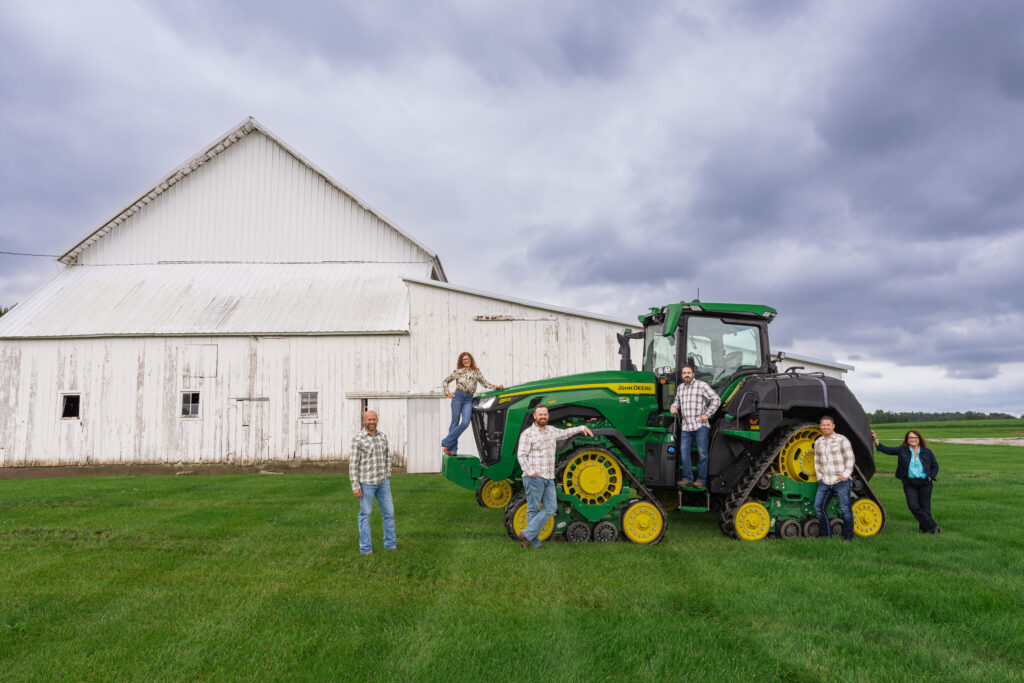
Then they can’t represent you there. Licensing is state by state. At our firm, Sara is licensed in Indiana, Illinois, Arkansas, and Texas; Hinnerk in Indiana, Illinois, and Wisconsin; Kyle in Indiana and Illinois; Brandon in Illinois; Landon and Suzy in Indiana. Ask any brokerage the same question directly.
Is it rude to interview more than one?
No. It’s a farm. Interview a couple, unless you already have a strong referral and a track record you trust.
One thing to do before you sign anything
Ask each broker you’re considering for the last three farms they sold in your county and what those listed at against what they closed at. You’ll learn more from how quickly they can answer than from the numbers themselves.
Talk to us when you’re ready. No pressure, no timeline, no rush.
About the author
Sara Hageman Schenck is Managing Broker at Hageman Realty. She holds the Accredited Land Consultant designation and a degree in Agricultural Business Management from Purdue, and she’s licensed in Indiana, Illinois, Arkansas, and Texas.
Read more about Sara at https://hagemanrealty.com/agent/sara-hageman-schenck/